Edward Enninful: From Underground to Cultural Force
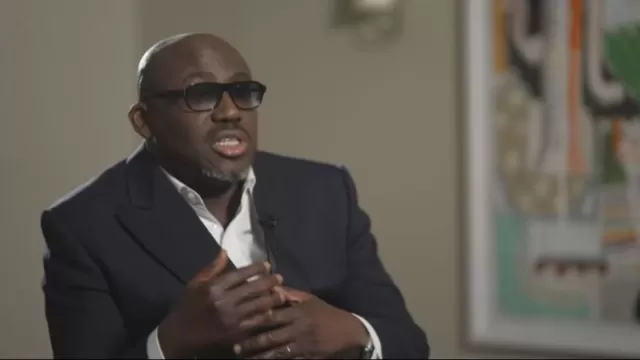
A chance encounter on the London tube in 1988 fundamentally altered the course of Edward Enninful's life. As a teenager recently arrived in the UK from Ghana, he was spotted and quickly immersed in the city's dynamic creative scene of the 1990s. This whirlwind journey saw him transition from model to stylist, and by the remarkably young age of 18, he was appointed the fashion director for i-D magazine, a role that would launch an extraordinary career.
The Unfiltered Energy of the 90s
Enninful speaks with fondness of that era's uninhibited spirit, a time defined by the creative crossover of the Young British Artists movement. He recalls meeting future supermodels like Kate Moss at castings and forming an instant, lasting friendship with Naomi Campbell during a cover shoot. It was a period where artists, musicians, and fashion figures mingled freely, creating a cultural melting pot. He reminisces about a certain rawness from that time that he feels is missing today.
This nostalgia is tempered by a more critical observation of the present. Enninful voices a concern that society has become less tolerant than it was in the 90s, a trend he sees not just in Britain but globally. He points to the resurgence of the far right and a backlash against progressive values as evidence of a cultural regression, a stark contrast to the optimism that once defined the nation.
A New Vision for a Fashion Institution
Throughout his career, Enninful's response to societal challenges has been to champion diverse cultures. This philosophy became the cornerstone of his tenure as the editor of British Vogue, a position he took up in 2017. His inaugural issue was a powerful statement on modern Britain, featuring a diverse array of influential figures from politics, music, art, and literature.
He believes that those with a platform have a responsibility to use it. His own story, he notes, is a product of an open and welcoming Britain that provided his immigrant family with a home and opportunities. This personal history has fueled his drive to advocate for a more inclusive world.
Enninful's appointment at Vogue was historic. He broke barriers as the first man, the first Black person, and the first gay and disabled person of colour to lead the magazine. Under his direction, the publication's covers became a canvas for representation, showcasing models of colour, plus-sized women, an octogenarian, a model wearing a hijab, and a woman with Down's syndrome. This commitment to inclusivity was not just a moral victory; it was a commercial success, proving that representation is good for business.
Resilience in the Face of Adversity
While his public persona is one of quiet confidence, Enninful's path has been marked by significant personal struggles. Growing up in England, he and his brothers faced racial profiling by the police. He has also been candid about his battles with depression and his long-term participation in an Alcoholics Anonymous program.
More recently, he endured a harrowing period of health crises involving his eyesight. After six operations, including one for a detached retina, he now lives with partial vision. He describes the two years spent in fear of going blind as a deeply dark time, an experience akin to PTSD. Emerging from that ordeal instilled in him a new resolve to pursue every opportunity without fear or self-limitation, moving beyond the confines of his identity as a fashion editor.
The Next Chapter of Creative Disruption
This newfound fearlessness is evident in his latest ventures. Since departing from his role at Condé Nast, he has launched a creative company, EE72, and an accompanying magazine, 72. He aims to continue challenging the established order, a drive he attributes to his unique life experience. Having grown up in Ghana, where Black individuals held all positions of power, his move to England as a penniless minority gave him a dual perspective of being both an insider and an outsider.
He is also channelling his creative energy into the art world. Enninful is currently curating a major exhibition on the 1990s for Tate Britain. The show aims to capture the decade's cross-pollination of creative fields and, crucially, to highlight artists who were overlooked by major institutions at the time due to their background. This role follows other successful curatorial projects, including a Robert Mapplethorpe show in Paris and a series of art talks at Art Basel.
An Innovative Future
His company, EE72, is pioneering a new business model that eschews traditional advertising in favour of strategic collaborations. This "ecosystem" approach might involve co-creating events, podcasts, or exclusive products with brand partners. Enninful is passionate about the potential for this model to be applied to cultural institutions like museums and galleries, which often face financial constraints. He firmly believes in the power of these spaces, recalling how a visit to the National Portrait Gallery as a young man was a life-changing experience.
Today, Enninful stands as one of the most connected figures in the creative industries, leveraging his extensive network to support his projects. Despite his high-profile status, he remains driven by a deep sense of purpose, rooted in his family's journey and his mother's influence as a seamstress who taught him to question everything. Reflecting on his journey, he acknowledges that his younger, more anti-establishment self would be shocked but proud of what he has achieved. Having faced displacement, prejudice, and the potential loss of his sight, he has learned that fear is not an option. He continues to defy expectations, proving that once he sets his mind to something, nothing can stand in his way.